
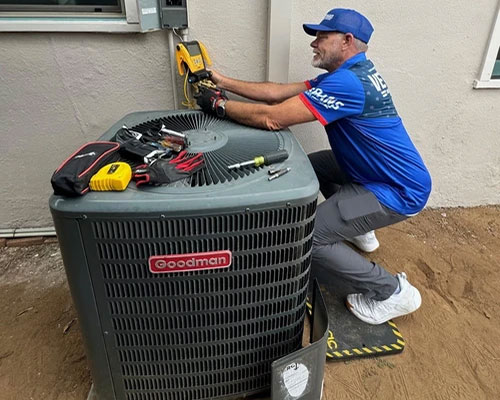
Coastal Grade Air Conditioner: What Survives Salt Air in Carlsbad
Updated October 27, 2026. Veterans Heating and Air Conditioning, Plumbing, and Electrical, Carlsbad, CA. Direct Answer A coastal grade air
Read More »Published on October 19, 2026
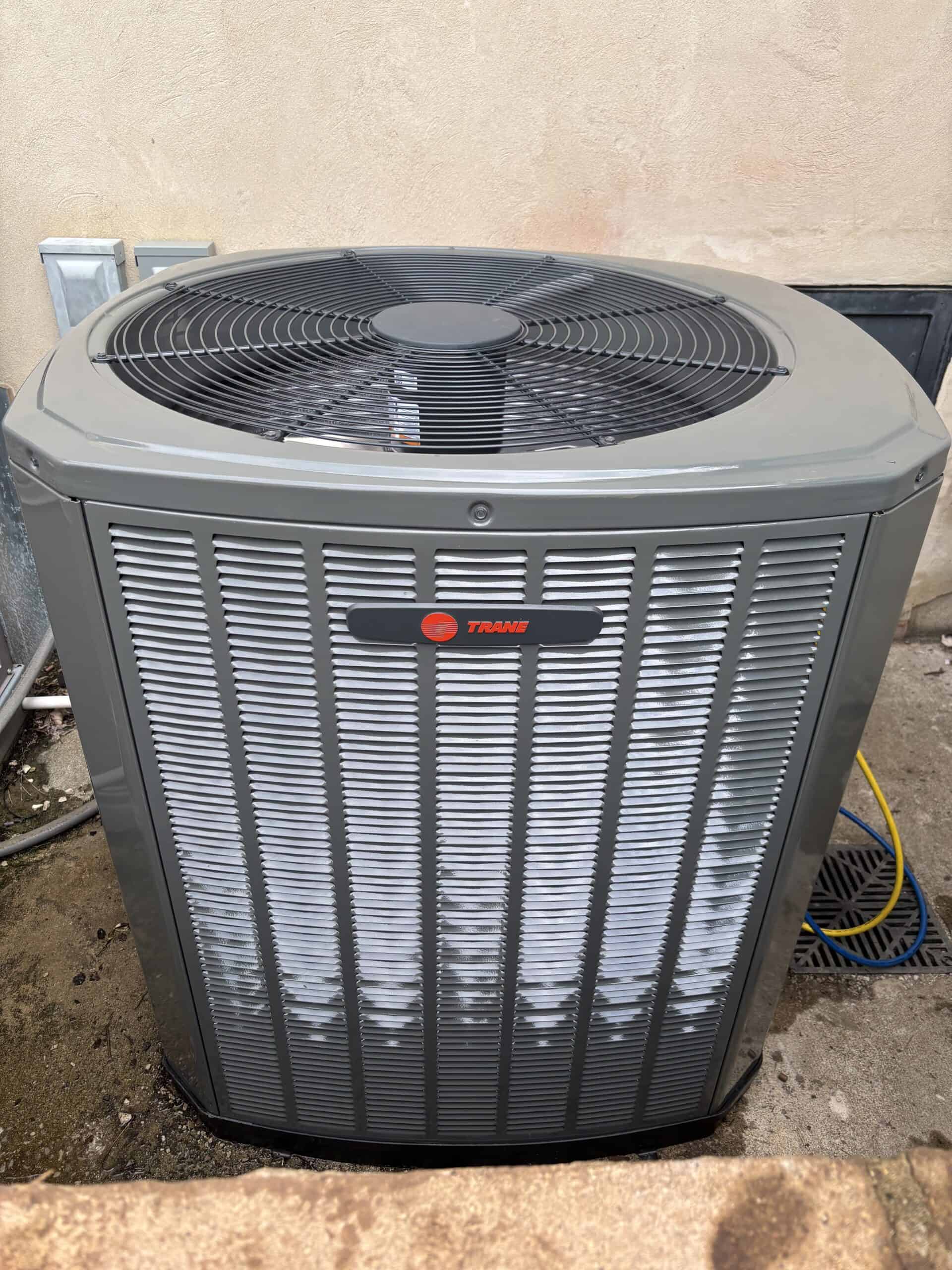
Updated October 19, 2026. Veterans Heating and Air Conditioning, Plumbing, and Electrical, serving Carlsbad, CA.
There is no measured lifespan for a coastal AC unit. Corrosion standards rate an environment by the hours its metal stays wet and by how much chloride lands on it, not by distance to the surf [1]. In Carlsbad, a rinsed unit outlasts an unrinsed one on the same street.
One liner: Coastal AC lifespan is set by accumulated wet salt hours on the metal, which is something a homeowner can change, unlike a zip code.
| Figure | Value | Source |
|---|---|---|
| Relative humidity where sodium chloride forms a liquid film | About 75 percent | Chen, Persson and Leygraf, 2004 [4] |
| Humidity at which corrosion under salt matched fully wet rates | 53 percent | Schindelholz, Risteen and Kelly, 2014 [3] |
| Lowest humidity at which corrosion under salt was sustained | 33 percent | Schindelholz, Risteen and Kelly, 2014 [3] |
| Carlsbad average relative humidity across the year | About 75 percent | Climate-Data.org, 1991 to 2021 data [5] |
| Carlsbad monthly average humidity range | 71 to 77 percent | Climate-Data.org, 1991 to 2021 data [5] |
| Carlsbad average humidity, June through August | 76 percent each month | Climate-Data.org, 1991 to 2021 data [5] |
| Carlsbad rainfall, June through September combined | About 12 mm, under half an inch | Climate-Data.org, 1991 to 2021 data [5] |
| Time of wetness definition threshold | Hours above 80 percent humidity and above freezing | ISO 9223:2012 [1] |
| Chloride class S1 deposition band | 3 to 60 mg per square meter per day | ISO 9223:2012 [1] |
| Chloride class S3 deposition band | Above 300 mg per square meter per day | ISO 9223:2012 [1] |
| Recorded chloride deposition across marine test sites | Roughly 3 to over 700 mg per square meter per day | EFC atmospheric corrosion site catalogue [7] |
| What the salt spray standard says about interpreting its results | It does not prescribe an interpretation | ASTM B117-19 [2] |
In short: Lifespan ranges keyed to distance from the ocean have no measurement standard behind them, and the salt spray test usually cited as proof says it does not prescribe how its results should be read [2].
Search the question and you get a tidy ladder. Fifteen to twenty years inland, eight to twelve near the coast, five to seven within a mile of open water. Several pages attach a multiplier to it, often four to eight times faster corrosion, and credit a salt spray standard for the figure.
That credit does not survive a look at the standard itself.
The salt spray practice covers the apparatus, the procedure, and the conditions needed to create and maintain a salt fog inside a cabinet. Its own scope states that it does not prescribe the test specimen or exposure periods for a specific product, nor the interpretation to be given to the results [2]. It is a way to compare one coating against another under repeatable conditions. It produces no service life figure for a condenser sitting in a side yard in Carlsbad Village.
The international standard that does rate outdoor environments works from two inputs. First, time of wetness, meaning the hours per year that humidity is above 80 percent while the temperature is above freezing. Second, the pollution load, which at the coast means chloride deposition measured in milligrams per square meter per day [1].
Distance to the water feeds the second input. It has no direct effect on the first. And the standard carries a note that reverses the usual coastal advice: surfaces that are sheltered and not washed by rain, where chlorides deposit and accumulate, can land in a higher corrosivity category than exposed ones, because hygroscopic salt holds moisture against the metal [1].
A condenser coil is exactly that surface. Shielded from rain by a fence, a roofline, or the cabinet itself, collecting salt, drying out on the outside while the fin pack stays damp.
In short: The gap between a coastal Carlsbad unit and an inland North County unit comes down to salt load, rinsing, and how long the metal stays wet, and every one of those is measurable at the unit.
| Factor | Coastal Carlsbad | Inland North County |
|---|---|---|
| Chloride arriving on the coil | Continuous, heaviest with onshore wind | Low and episodic |
| Months with no rinsing rainfall | Roughly June through September [5] | Similar, but with far less salt to clear |
| Humidity through the year | Monthly averages of 71 to 77 percent [5] | Drops further after sunset |
| First component to degrade | Condenser fins and coil | Coil fouling from dust and pollen |
| Dominant mechanism | Chloride pitting and galvanic attack [1] | Airflow restriction and heat transfer loss |
| What a lifespan estimate depends on | Rinse interval, placement, coil protection | Maintenance and run hours |
| Useful inspection cadence | Set against exposure, not the calendar | Annual |
The point of the table is the bottom row. Inland, an annual visit covers the job. On the coast, the right interval depends on what is landing on the unit, and that varies street by street.
In short: Once salt is on the metal, corrosion continues at humidity levels Carlsbad reaches almost every day, so the meaningful count is hours of wet salt rather than years on the nameplate [3].
Salt is often described as harmless until humidity crosses about 75 percent, the point where sodium chloride pulls in enough water to form a film [4]. That figure is real, and it is also where the common explanation stops.
Laboratory work on steel under sea salt deposits found corrosion sustained down to 33 percent relative humidity, and at 53 percent and above the attack proceeded at rates comparable to fully wet conditions [3]. The threshold that matters for damage sits far below the one usually quoted.
Now put Carlsbad numbers against it. Monthly average humidity runs between roughly 71 and 77 percent, with a yearly average near 75 percent [5]. June, July, and August each average 76 percent, which clears even the commonly quoted 75 percent film point [4][5]. Overnight readings under the marine layer climb higher. On that data, a salted coil in Carlsbad is above the damaging threshold close to continuously.
Rainfall closes the loop. From June through September, Carlsbad averages about 12 millimeters of rain in total, under half an inch [5]. Nothing rinses the unit through the heart of the cooling season. Salt deposited in spring is still on the fins in autumn, wet most of the time, doing work.
In short: Placement, shade, wind exposure, and rinsing habits move coastal lifespan more than a few hundred meters of distance do.
Neighbors compare notes and find one unit failing at year nine while the other is steady at fourteen. The variables that explain the gap are local to the property:
Shade is the one people get backwards. A shaded unit stays cooler, which helps efficiency, and stays damp longer, which does not. On a salted surface the second effect carries more weight than the first.
In short: Age gives you a prompt to look, and what you find on the coil tells you where the unit actually stands.
| Age | What is usually true on the coast | What to check |
|---|---|---|
| 0 to 5 years | Surface salt present, performance intact | Establish a rinse interval and confirm coil protection |
| 6 to 10 years | Fin thinning begins, running cost drifts up | Fin condition, cabinet base, electrical terminals |
| 11 to 15 years | Corrosion reaches fasteners and connections | Coil integrity, refrigerant loss, capacitor and contactor condition |
| Over 15 years | Repairs stack up on a system already down on capacity | Whether further spend beats a coastal grade replacement |
White crusting on the fins, rust at the base, or a fin pack you can flatten with a fingertip all outrank the number on the data plate. So does a cooling bill that climbs while the thermostat setting stays put.
In short: Clearing chloride before it accumulates is the highest value habit, and it is the one thing about coastal exposure a homeowner controls [1].
Four things move the number in a direction you want:
When corrosion has already reached the coil or the electrical side, the question shifts from upkeep to whether continued repair spend beats a system specified for coastal exposure from the start. A technician who checks corrosion on every visit can tell you which side of that line your unit sits on, and size a replacement to the exposure your property actually has.
There is no measured lifespan for a coastal unit. Corrosion standards rate a site by time of wetness and chloride deposition, not by street address [1]. Coastal HVAC pages commonly quote 8 to 12 years. Treat that as field experience rather than a measurement, because no standard produces it. A unit that gets rinsed on a schedule and sits out of direct salt spray can run well past the range that an unrinsed one on the same block reaches.
No. Distance changes how much chloride lands on the unit, but it does not set the corrosion rate on its own [1]. The corrosion standard scores an environment on two things together, how much salt arrives and how many hours the metal stays wet. A unit a mile inland that never gets rinsed can carry more accumulated salt than one three blocks from the sand that gets washed down every month.
Time of wetness is the number of hours a year that relative humidity sits above 80 percent while the temperature is above freezing [1]. Corrosion standards use it as a core input because metal only corrodes while a liquid film is present. Salt on the surface raises this figure further, since the salt pulls water out of the air at humidity levels well below rainfall.
No. Corrosion under salt deposits has been sustained in testing down to 33 percent relative humidity [3]. In the same work, corrosion at 53 percent humidity ran at rates comparable to fully wet conditions. Carlsbad sits near or above that mark almost every day of the year, so salt left on a coil stays active rather than waiting for fog.
Sodium chloride absorbs enough water to become a liquid film at about 75 percent relative humidity [4]. That number is the deliquescence point and it is often quoted as the trigger for coastal corrosion. It marks where a visible film forms, not where damage starts, because corrosion continues below it on adsorbed water.
The salt spray standard those pages cite does not prescribe how its results should be interpreted [2]. The standard covers apparatus, procedure, and test conditions for a fog cabinet. It states plainly that it does not prescribe exposure periods for a specific product or the interpretation to be given to results, so no service life multiplier comes out of it.
Rain rinses salt off the coil. Carlsbad gets close to no rain from June through September [5]. Corrosion standards rate sheltered surfaces that rain never washes as more aggressive, because deposited chlorides build up instead of clearing [1]. Salt that lands on a condenser in May is still sitting there in October unless someone rinses it off.
Monthly averages sit between roughly 71 and 77 percent, with a yearly figure near 75 percent [5]. June, July, and August each average 76 percent, and overnight readings under the marine layer run higher still. That is why coastal Carlsbad behaves like a high corrosivity site even though total rainfall is low and summer afternoons feel dry.
The outdoor condenser coil and its aluminum fins take the load first, because they hold the salt and stay damp [1]. Fin loss reduces heat transfer before anything stops working, so the early symptom is higher running cost rather than a breakdown. Electrical terminals and the cabinet base usually show damage later.
No. Formicary corrosion comes from organic acids, not from chlorides [6]. It shows up as pinhole leaks in copper tubing and traces back to compounds that break down into formic or acetic acid in the presence of air and moisture. Coastal pages often lump it in with salt damage, which sends homeowners after the wrong fix.
A coating slows chloride attack on the coil, but it does not remove the salt sitting on the unit [1]. Coatings buy time on the surface they cover. Fasteners, cabinet panels, the fan shroud, and electrical terminals stay exposed, and every one of them still needs the salt rinsed off.
More often than an inland unit, and at least through the dry months when no rain does it for you [5]. The point is to clear chloride before it accumulates across an entire season. A technician can set the interval against how exposed your unit is and check the coil for fin loss at the same time.
That depends on where the corrosion sits, not only on the age of the unit [1]. Fin loss and surface rust on panels are different problems from a leaking coil or pitted electrical terminals. A technician assessment tells you which one you have and whether a replacement sized for coastal exposure is the better spend.
It contributes more, because corrosion tracks hours of wetness rather than peak temperature [1]. The marine layer keeps humidity high overnight for much of the year. That steady dampness on salt loaded metal does more cumulative damage than a handful of hot afternoons.
Recorded marine sites range from a few milligrams to several hundred milligrams of chloride per square meter per day [7]. The corrosion standard splits that span into classes, and the jump between them is large [1]. It is why one number cannot describe every coastal home, and why exposure has to be read at the unit rather than assumed from the zip code.
| Term | Plain meaning |
|---|---|
| Time of wetness | The hours per year that relative humidity is above 80 percent while the temperature is above freezing. Corrosion standards use it to score how aggressive a site is. |
| Chloride deposition rate | How much airborne salt settles on a surface, measured in milligrams per square meter per day. |
| Deliquescence | The point at which a salt absorbs enough water from the air to turn into a liquid film. For sodium chloride that is about 75 percent relative humidity. |
| Condenser coil | The outdoor coil that releases heat from the refrigerant. Its thin aluminum fins are the first surface salt damages. |
| Coil coating | A factory or field applied barrier on coil surfaces that slows chloride attack. It protects the coil, not the rest of the cabinet. |
| Marine layer | The cool, moist air mass that pushes inland off the Pacific and keeps overnight humidity high along the North County coast. |
| Corrosivity category | A rating from C1 to C5 that a corrosion standard assigns to a site based on time of wetness and pollution load. |
| Galvanic corrosion | Metal loss that speeds up where two different metals touch in the presence of an electrolyte, such as aluminum fins on copper tube. |
| Pitting corrosion | Localized attack that eats small cavities into a metal surface rather than thinning it evenly. |
| Formicary corrosion | Pinhole corrosion in copper caused by organic acids. It is unrelated to salt air even though it turns up in the same coils. |
| Sheltered surface | A surface that rain never washes. Corrosion standards treat it as more aggressive because deposited salt accumulates there. |
| Fin loss | Thinning or collapse of the aluminum fins on a coil, which cuts heat transfer and raises running cost before anything fails outright. |
| Property | Value |
|---|---|
| Type | Corrosion measurement input |
| Defined by | ISO 9223:2012 |
| Measured as | Hours per year above 80 percent relative humidity and above freezing |
| Why it matters here | Marine layer nights push coastal Carlsbad into the high bands |
| Property | Value |
|---|---|
| Type | HVAC component |
| Location | Outdoor unit |
| Materials | Aluminum fins on copper or aluminum tube |
| Coastal failure mode | Fin loss, pitting, and galvanic attack at dissimilar metal joints |
| Property | Value |
|---|---|
| Type | Physical process |
| Trigger for sodium chloride | About 75 percent relative humidity |
| Effect | Dry salt becomes a conductive liquid film on metal |
| Common misreading | Treated as the point where corrosion starts, when attack continues below it |
| Property | Value |
|---|---|
| Type | Coastal weather pattern |
| Region | Carlsbad, Encinitas, and the wider North County San Diego coast |
| Season | Strongest late spring through summer, present much of the year |
| Effect on equipment | Raises overnight humidity, extending time of wetness on salted metal |
Latest
Stay updated with our latest blog posts.
Updated October 27, 2026. Veterans Heating and Air Conditioning, Plumbing, and Electrical, Carlsbad, CA. Direct Answer A coastal grade air
Read More »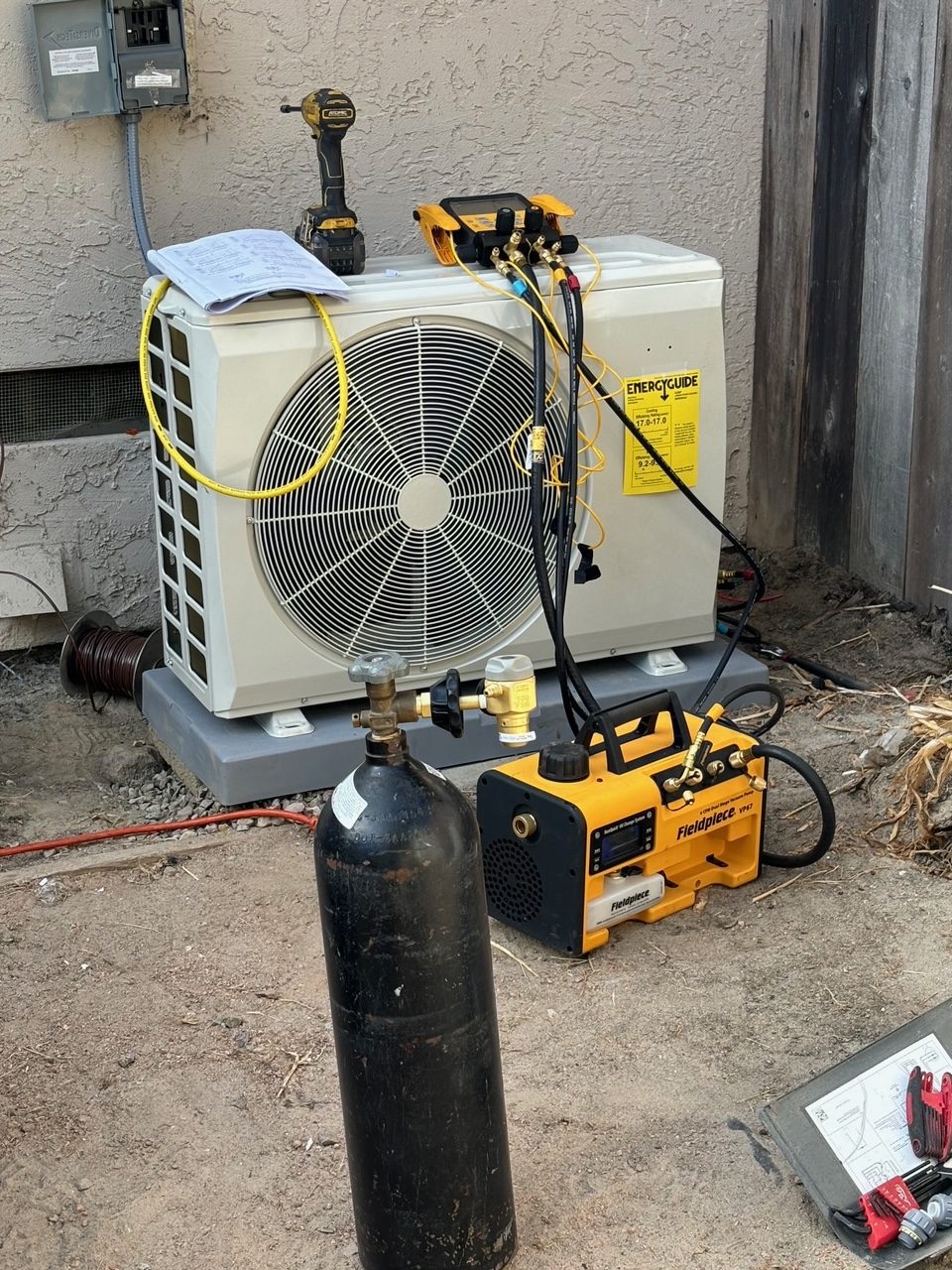
Updated October 27, 2026. Veterans Heating and Air Conditioning, Plumbing, and Electrical, heating and air conditioning service in Carlsbad, CA.
Read More »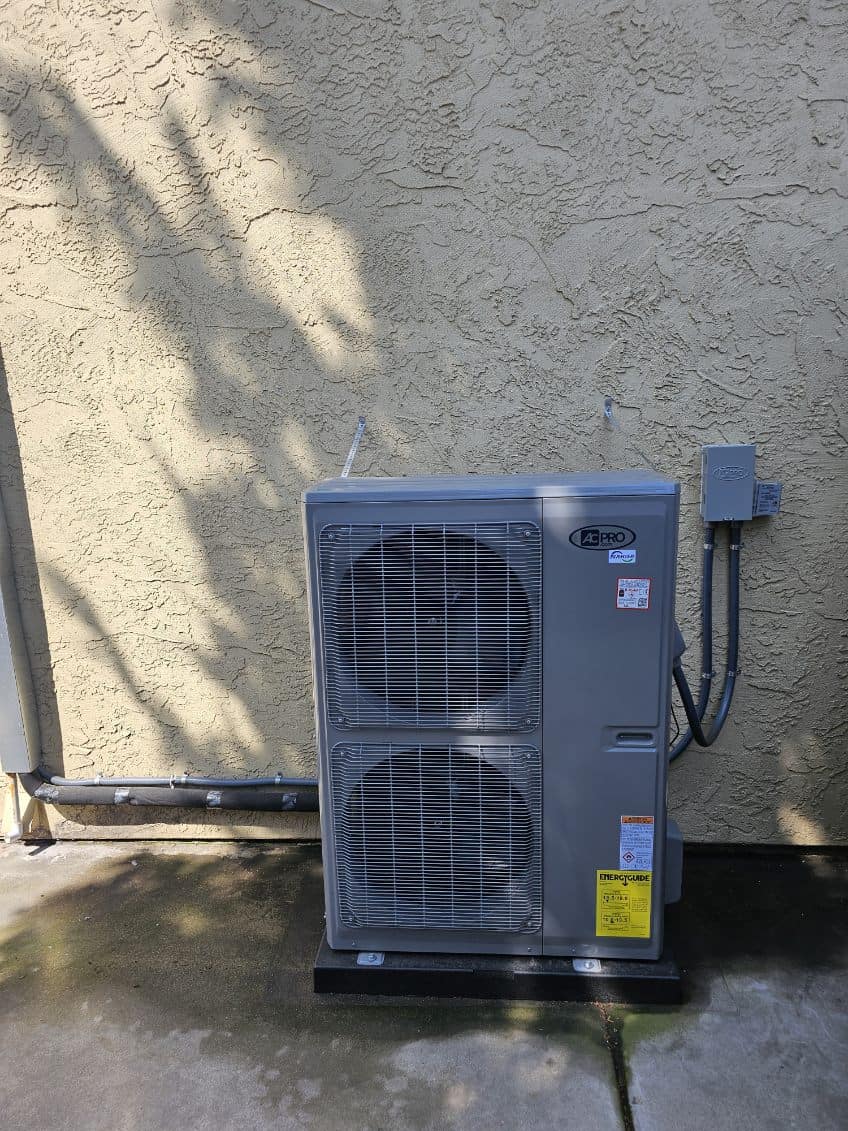
Updated September 22, 2026 | Veterans Heating and Air Conditioning, Plumbing, and Electrical, Carlsbad, CA Direct Answer Coastal AC corrosion
Read More »